




The initiative includes BRAINN researcher Iscia Lopes‑Cendes and aims to expand the reach of precision medicine within a complex global socioeconomic landscape.
Precision medicine for all — this is the objective of a new global initiative that seeks to broaden the scope of precision health (a term encompassing both disease prevention and treatment), deploying cutting‑edge technologies across diverse socioeconomic contexts.
The The Lancet Commission on Precision Health, of which CEPID BRAINN researcher Dr. Iscia Lopes‑Cendes is a member, intends to translate medical, scientific, technological and analytical advances into effective, equitable and financially sustainable health interventions that account for the social, cultural and economic characteristics of specific populations. This is precision medicine in practice, tested in real‑world settings. Below is a summary of the project.
See also
Annual Reviews: como integrar Genômica, Medicina de Precisão e sistemas de saúde na América Latina?
The era of one‑size‑fits‑all treatment is over
Many of the world’s most common and serious diseases (such as cardiovascular disease, mental health disorders and cancer) do not affect all individuals in the same way. Disease etiology and treatment responses can vary substantially between individuals and across populations. Nevertheless, most health systems still employ a one‑size‑fits‑all approach, which constrains therapeutic efficacy and the equity of care.
According to researchers from The Lancet Commission, this unified approach to disease management made sense until recently, prior to the major medical, technological and data‑processing advances of the last decades.
“Most modern healthcare is based on population averages — adopting an approach that assumes what works on average will work for each individual,” the group states.
“This ‘one‑size‑fits‑all’ model was reasonable when we lacked tools to predict disease risk or treatment response with precision. Today, however, we know that people differ markedly in how diseases develop and how treatments perform, depending on their genetics, environment, behavior and access to healthcare.”
About the Commission
The The Lancet Commission on Precision Health aims to change this paradigm by developing prevention and care strategies that make healthcare more effective and equitable worldwide. The group’s stated goal is “to ensure that the benefits of precision medicine reach all populations, not only a privileged few.”
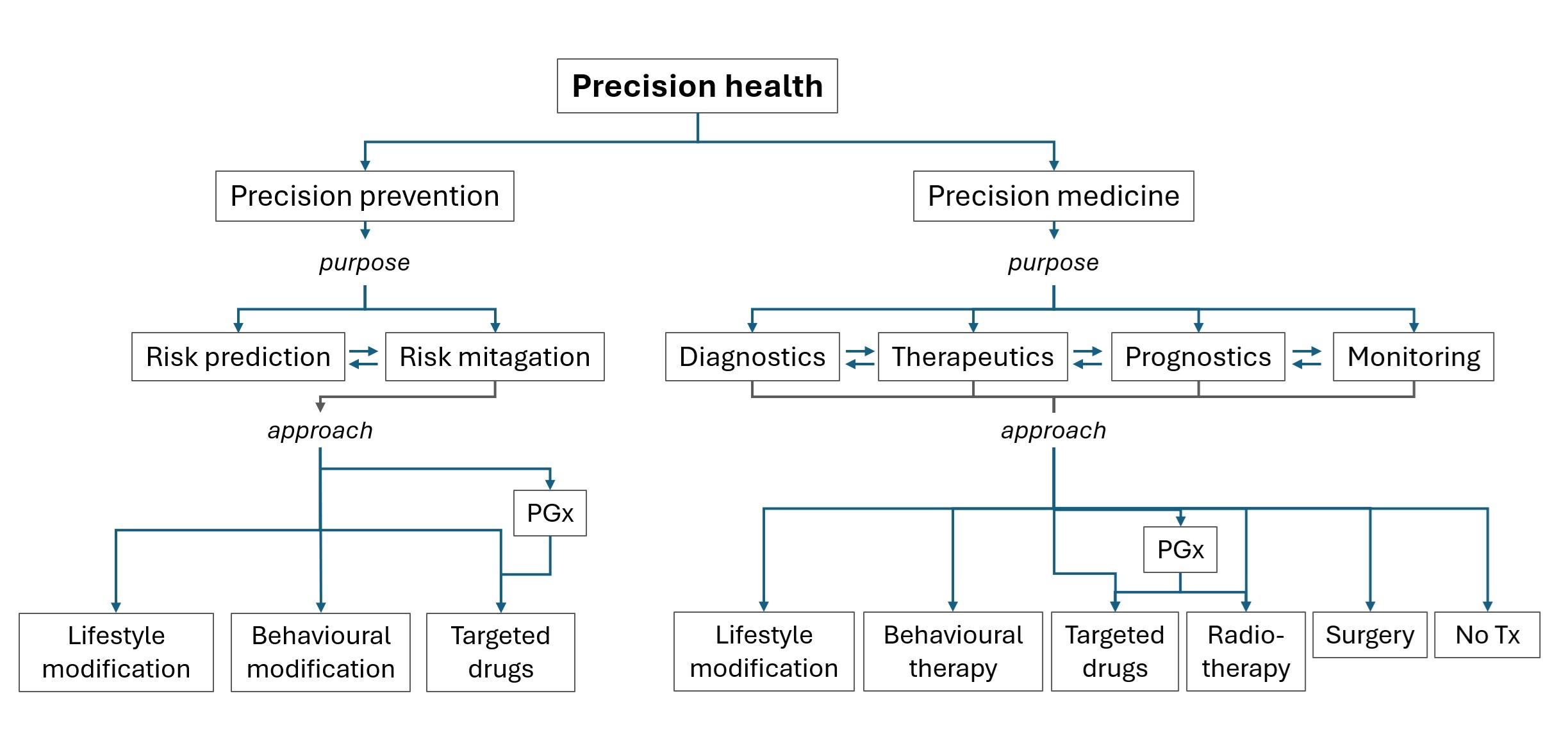
Working model of the Commission for precision health studies. Source: official website of the group
Precision‑based strategies have already been implemented successfully in high‑income countries using advanced (and costly) technologies, particularly in oncology. The Commission seeks to demonstrate that these examples do not exhaust the potential of this medical‑scientific approach, which can also be adopted in settings with greater economic and technological constraints. In other words, there are accessible, low‑cost opportunities that can help scale precision medicine globally.
Precision Health considers an individual’s genetic, biological and environmental characteristics to design tailored therapeutic strategies. This enables improvements in treatment duration and effectiveness, as well as in preventive measures.
The group will examine the application of precision health both for disease prevention (through lifestyle changes, behavioral interventions and pharmacotherapies) and for disease management (including diagnostics, therapies, prognostics and monitoring), comparing health outcomes and quality of life of subgroups and individuals against traditional standardized treatments.
The Commission comprises more than 20 researchers from around the world. Latin America is represented by CEPID BRAINN physician‑researcher Dr. Iscia Lopes‑Cendes, an expert in genomic medicine and multi‑omics technologies applied to neuroscience, and by Dr. Christian Kieling from the Federal University of Rio Grande do Sul.
The Commission will operate for approximately three years, having been formally launched in January 2026. The group’s studies, analyses, findings and recommendations will be published periodically in The Lancet, one of the world’s leading scientific journals.
For further reading
For more details and information, consult the official launch announcement in The Lancet and the links below.
- Franks PW, Lim LL, Ramsay M, Chotirmall SH, Abedalthagafi MS, Ali R, K SB, Ford J, Giordano GN, Hamdi Y, Kieling C, Leal J, Li F, Lopes‑Cendes I, Lyons L, Misra S, Owolabi MO, Rosenquist R, Tandon N, Tsosie KS, Udler MS, Smeden MV, Verguet S, Wason J. The Lancet Commission on precision health: equitable, data‑driven health outcomes for all. Lancet. 2026 May 25:S0140-6736(26)00612-4. doi: 10.1016/S0140-6736(26)00612-4. Epub ahead of print. PMID: 42184810.
- See the Commission’s publications list: https://www.theprecisionhealthcommission.org/publications/
- Visit the official website: https://www.theprecisionhealthcommission.org/




 Português do Brasil